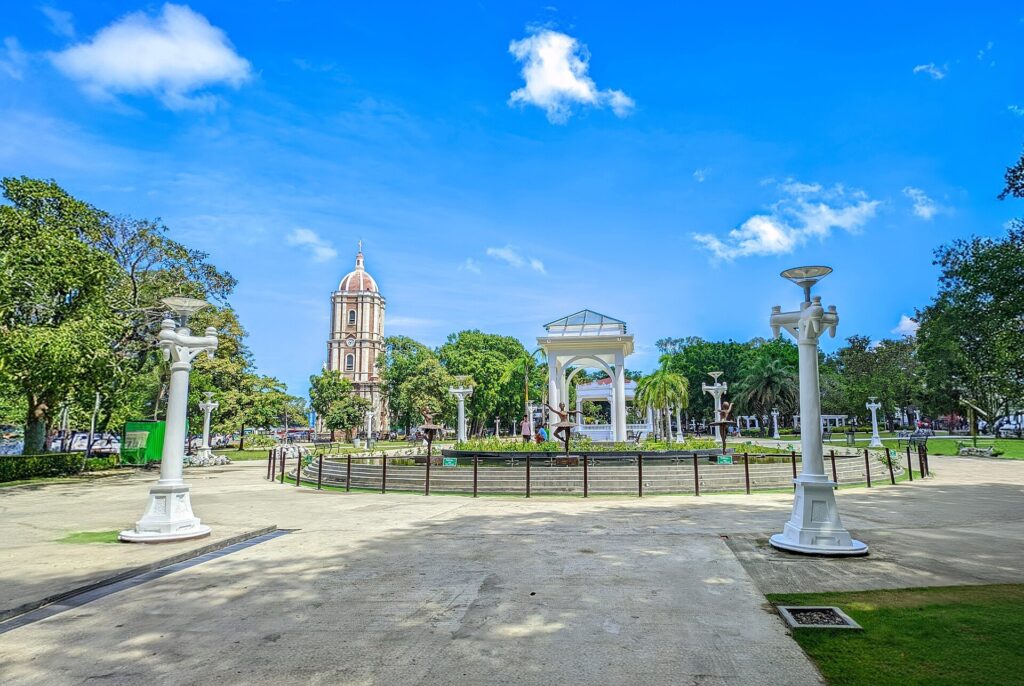
A boy from Jaro
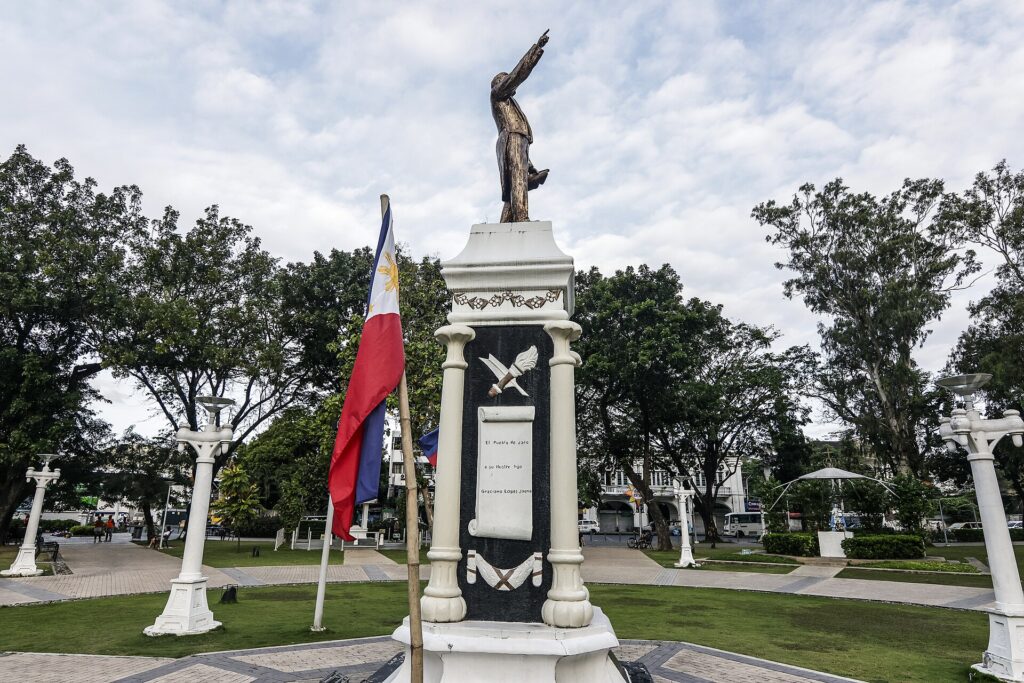
Graciano López Jaena was born on December 18, 1856, in Jaro, Iloilo. Today Jaro is a district of Iloilo City, and a statue of him stands in Jaro Plaza. His parents were poor. His mother, María Jacoba Jaena, was a seamstress, and his father, Plácido López, was a general repairman.
His mother hoped he would become a priest, so he attended the Seminario de San Vicente Ferrer in Jaro, where he also worked as secretary to his uncle, Claudio López, the honorary vice consul of Portugal. What the boy himself wanted was to become a doctor.
A doctor’s dream, and a satire
He applied to the University of Santo Tomas in Manila but was refused, because he did not have the Bachelor of Arts degree required for admission. He was then apprenticed at the San Juan de Dios Hospital in Manila. When the money ran out, he returned to Iloilo and practiced medicine in the outlying communities.
At the age of 18 he wrote Fray Botod, a short satire about a greedy, abusive friar. It was never published, but it passed from hand to hand in the region, and the friars were angry.
According to one biography, he later refused to testify falsely about prisoners who had died at the hands of the mayor of Pototan, a town in the Province of Iloilo. Threats against his life followed. In 1880, in his early twenties, he left for Spain.
Spain: from student to speaker
In Spain he enrolled in medicine at the University of Valencia but never finished. He turned instead to the two skills that would define his life: speaking and writing. In 1881 a speech of his praising Fernando León y Castillo for ending the tobacco monopoly in the Philippines drew praise from the Madrid press. He joined the Freemasons in Madrid in 1882. In 1883, at a banquet honoring Columbus at the Teatro Real de Madrid, he spoke about the situation of the Philippines under the influence of the friars.
What he asked for, at first, was equality. One account says he hoped the Philippines would be treated as a province of Spain with the same rights as any other, with freedom of speech, of the press and of association, and with the removal of the friars.
La Solidaridad
In early 1889 he founded and edited La Solidaridad, a fortnightly newspaper first published in Barcelona. Sources differ on the exact date of the first issue; one gives February 15, 1889. In November 1889 the paper moved to Madrid, and Marcelo H. del Pilar became its editor. Together with del Pilar and José Rizal, López Jaena is counted among the three leading figures of the Propaganda Movement.
One account says that in 1890 he made a secret trip to Manila under an assumed name, and that in 1890 and 1891 he was in Hong Kong with José María Basa, organizing a reform association. In 1891 his speeches and articles were collected in a book, Discursos y Artículos Varios. José Rizal considered him the most talented Filipino he had ever known.
The last years
He spent his last years in poverty in Barcelona. He died there on January 20, 1896, at the age of 39. Most sources name tuberculosis; one lists arteriosclerosis, possibly a complication of tuberculosis. He was buried in a common grave at the Montjuïc cemetery, and his remains have never been returned to the Philippines. He did not live to see the Philippine declaration of independence in 1898.
Remembered in Jaro
He is remembered in the place where he began. A statue of him stands in Jaro Plaza, and a bust and a historical marker stand at his birthplace on Fajardo Street. Rosendo Mejica named a street after him and paid for a bust at Baluarte Elementary School.
Why our Ilonggos Abroad section begins with him
López Jaena shows something that many Ilonggos still know. A person can leave Panay and still carry it everywhere. He went to Spain with very little money and would not stay silent about what he had seen at home. With a speaker’s podium and a newspaper, he spoke for the people he had left behind.
Today Ilonggos live and work in many countries, and still speak for their families, their towns and their country in their own ways. If you know an Ilonggo whose story belongs here, please write to us at pamanagbanag@brightermornings.online.
Sources checked
- Wikipedia, Graciano López Jaena
- Philippine Masonry, Graciano López Jaena
- Philippinen.at, Graciano López Jaena
- Rappler, on López Jaena
Checked in 4 written sources. Native-speaker review: not needed (history essay). Dr. Redge’s review: waiting.
How did this story make you feel?
One tap. It is anonymous, and you can change your answer any time.
This home is built by its readers.
If this story reminded you of someone, there are three easy ways to help the next one reach them.
Comments
We read every comment before it shows. Please keep it kind.