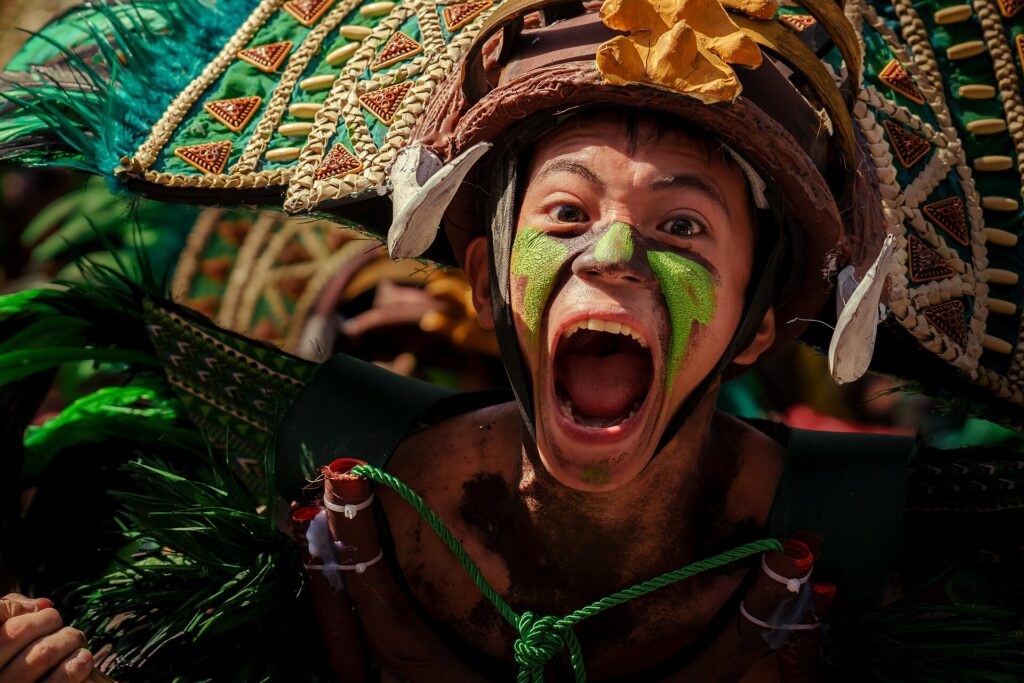
Every year on the fourth Sunday of January, the streets of Iloilo City fill with drums, chants and dancers.
How it began
In November 1967, Fr. Ambrosio Galindez introduced devotion to the Santo Niño in Iloilo after seeing the Ati-Atihan in Aklan. The first celebration was held in 1968, when a replica of the Santo Niño de Cebu was brought to the city. In 1977, the government asked regions to develop tourism festivals and Iloilo chose this one. Broadcaster Pacifico Sudario coined the name “Dinagyang,” from a Hiligaynon word related to dágyang, merrymaking.
The tribes
The main event is the Ati Tribes Competition. Groups called tribu perform choreographed dances, chants and drum routines in Ati warrior costumes. The festival also remembers the legendary pact between Malay settlers and the Ati people of Panay. Since 2013, some Ati from the Panay hinterlands have been invited to take part without competing.
Recognition
Dinagyang is described as the most awarded festival in the Philippines. It won the Best Festival in the Visayas at the 2024 Philippine LEAF Awards and has many Aliwan Fiesta titles.
Ilonggos abroad
For those far from Iloilo, January is when the homesickness peaks. Play the drums on a video call, and wear something red.
Source: Dinagyang, Wikipedia.
How did this story make you feel?
One tap. It is anonymous, and you can change your answer any time.
This home is built by its readers.
If this story reminded you of someone, there are three easy ways to help the next one reach them.
Comments
We read every comment before it shows. Please keep it kind.