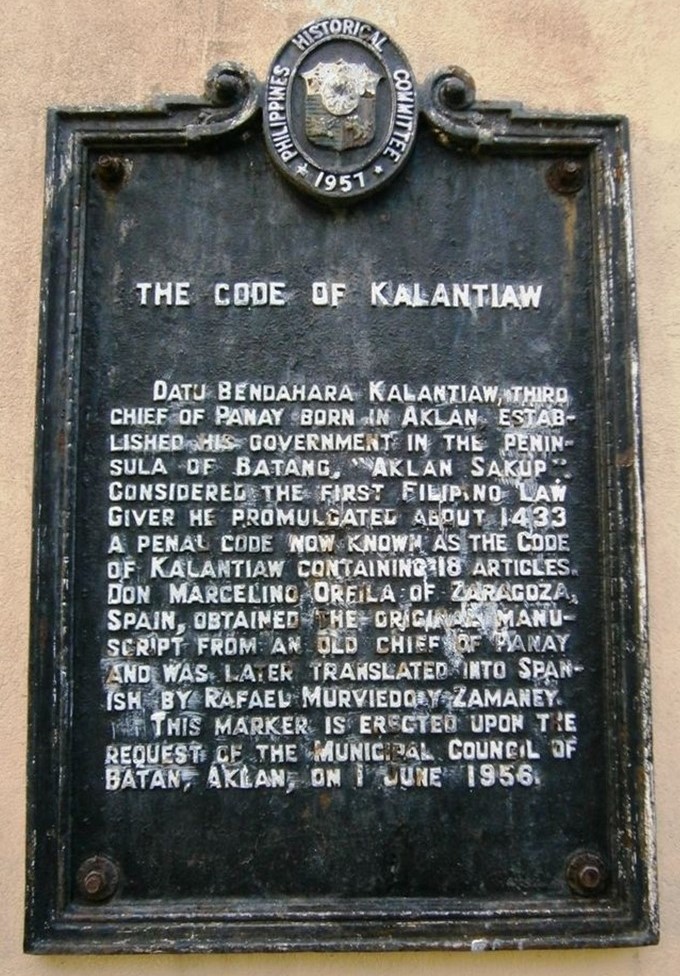
Generations of Filipino students were taught about the Code of Kalantiaw. It is a good story, and it was not true.
The claim
The code was said to be a set of 18 harsh laws, written in 1433 by Datu Kalantiaw, a chieftain on Negros, and preserved in the story of the Maragtas.
The author
Historians now generally accept that the code was a deliberate fabrication. It is credited to José Marco, who wrote it in 1913 as part of a work of historical fiction. Marco later donated manuscripts to the American historian James Alexander Robertson, which gave the code its first scholarly acceptance. In 1917 Marco moved the code’s setting from Negros to Aklan, on Panay.
The student who checked
William Henry Scott began studying pre-Hispanic sources in 1965 as a doctoral candidate at the University of Santo Tomas. He concluded the code was forged, and presented his findings in his dissertation defended on June 16, 1968. Textbooks took nearly thirty years to change. In 2005, the Office of the President approved a National Historical Institute resolution declaring the code a fraudulent twentieth-century work.
The lesson
Love your stories, and check your sources. We try to do both here.
Source: Code of Kalantiaw, Wikipedia.
How did this story make you feel?
One tap. It is anonymous, and you can change your answer any time.
This home is built by its readers.
If this story reminded you of someone, there are three easy ways to help the next one reach them.

Comments
We read every comment before it shows. Please keep it kind.